
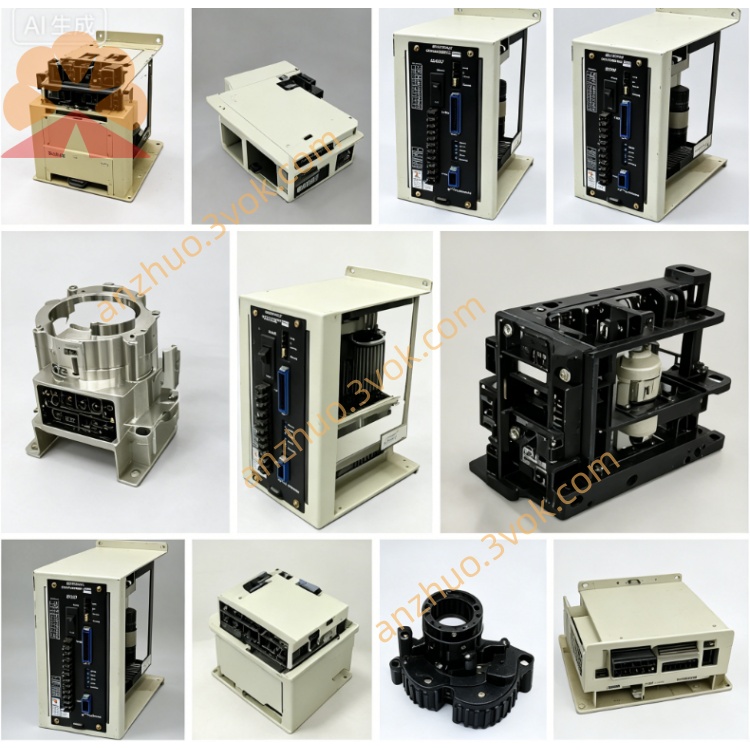
YASKAWA JANCD-TU05 dedicated relay power control board
JANCD-TU05 is a dedicated relay power control board for Yaskawa XRC series Motoman robot cabinets. It controls the main contactor power loop, integrates fuse protection and relay switching circuits to stabilize robot power supply logic.
Description
Product Brief
JANCD-TU05 is a dedicated relay power control board for Yaskawa XRC series Motoman robot cabinets. It controls the main contactor power loop, integrates fuse protection and relay switching circuits to stabilize robot power supply logic.
Model Definition
JANCD: General circuit board prefix for Yaskawa robot control cabinetTU: Power relay control board series for XRC robot system05: Fifth-generation standard power control hardware version
Technical Parameters
DC24V operating power supply, equipped with two built-in 5A safety fuses for overcurrent protection. Overall dimension 120mm×100mm×30mm, net weight 0.1kg. Operating temperature 0–40℃, storage temperature -20–70℃, ambient humidity ≤80%RH without condensation, maximum working altitude 1000m, IP10 protection grade, cabinet fixed mounting structure.
Interface and Communication Configuration
Multiple multi-pin plug connectors marked CN01 to CN05 are reserved on the board. Internal connectors connect XRC main CPU backplane to receive power switch commands; external terminals link cabinet main contactor, power input loop and peripheral safety power circuits. Hardwired signal transmission without serial communication bus.
Core Functions
Execute robot cabinet power-on and power-off relay switching logic to control main contactor pull-in and cut-off. Dual independent 5A fuses provide overcurrent isolation for power branches to avoid circuit burnout. Monitor power loop conduction state in real time and feed power fault signals back to main control board. Block abnormal surge current to protect internal CPU and servo boards.
Application Scenarios
Exclusively matched with Yaskawa XRC robot control cabinets, compatible with Motoman UP, HP, EA series multi-axis industrial robots. Widely used in automated welding, workpiece handling, component assembly, polishing and spraying robotic production lines as spare replacement for power loop failure.
Operation and Maintenance Instructions
Cut off total cabinet power and wait 10 minutes for full capacitor discharge before disassembly or wiring. Keep control cabinet dry and dust-free to prevent welding fume and oil mist from corroding relay contacts and fuses. Regularly inspect all plug terminals for looseness and oxidation. Clean board surface dust with dry compressed air every three months. Replace fuses with same-specification 5A parts only; replace the whole board if relay adhesion or power loop short-circuit occurs.
Get a Quote