
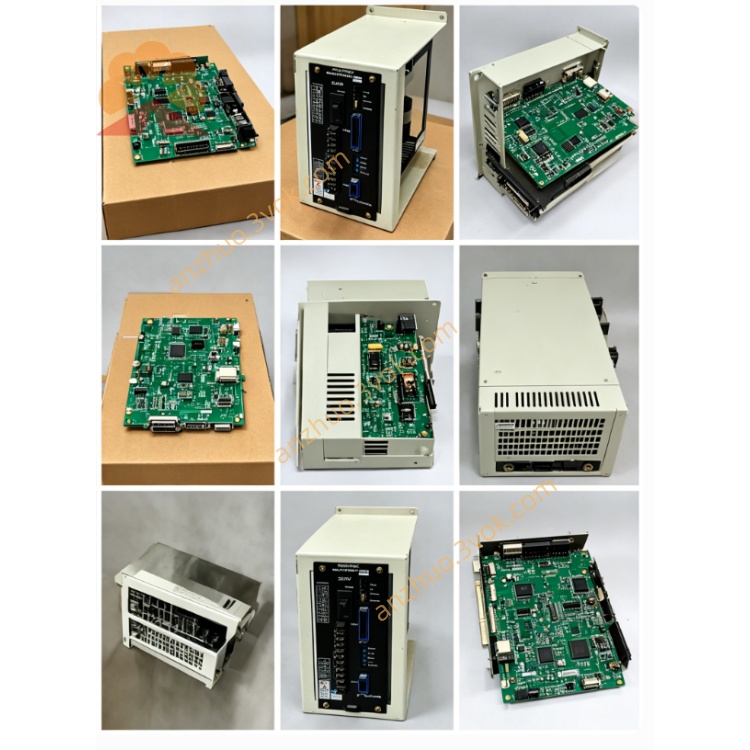
YASKAWA JANCD-YIF01 interface signal board
JANCD-YIF01 is an interface signal board for Yaskawa CNC systems. It acts as a signal bridge between the main control board, servo units and peripheral equipment to transmit motion and external switching signals stably.
Description
Product Brief
JANCD-YIF01 is an interface signal board for Yaskawa CNC systems. It acts as a signal bridge between the main control board, servo units and peripheral equipment to transmit motion and external switching signals stably.
Model Definition
JANCD: Universal circuit board prefix for Yaskawa CNC controllersYIF: Peripheral signal interface board series01: First-generation standard hardware version
Technical Parameters
Rated operating voltage DC24V for signal circuits with low power loss. Built-in surge and electromagnetic interference suppression circuits. Operating temperature range 0–55℃, storage temperature -20–85℃, IP10 protection grade for cabinet mounting. Supports differential and single-ended signal transmission.
Interface and Communication Configuration
Internal backplane connector exchanges high-speed data with the main CPU board. External dedicated connectors link servo drives, manual pulse generators and machine operation panels. Independent channel LED indicators display real-time signal transmission and fault states.
Core Functions
Transmits axis motion commands and position feedback signals between CNC mainboard and servo amplifiers. Processes input signals from handwheel, limit sensors and operation buttons. Detects open circuit and short-circuit faults automatically and uploads alarm information to the main control unit.
Application Scenarios
Matching Yaskawa numerical control systems for CNC lathes, milling machines and small machining centers. Applied to mold engraving equipment, precision cutting machines and automated CNC workstations for motion signal interconnection.
Operation and Maintenance Instructions
Cut off total cabinet power and wait 10 minutes for capacitor discharge before plugging or wiring. Maintain dry and ventilated cabinet environment to prevent dust, oil mist and metal scraps from adhering to the circuit board. Inspect connectors regularly for looseness and oxidation. Clean dust with dry compressed air every three months, replace the board when persistent signal communication failures appear.
Get a Quote