
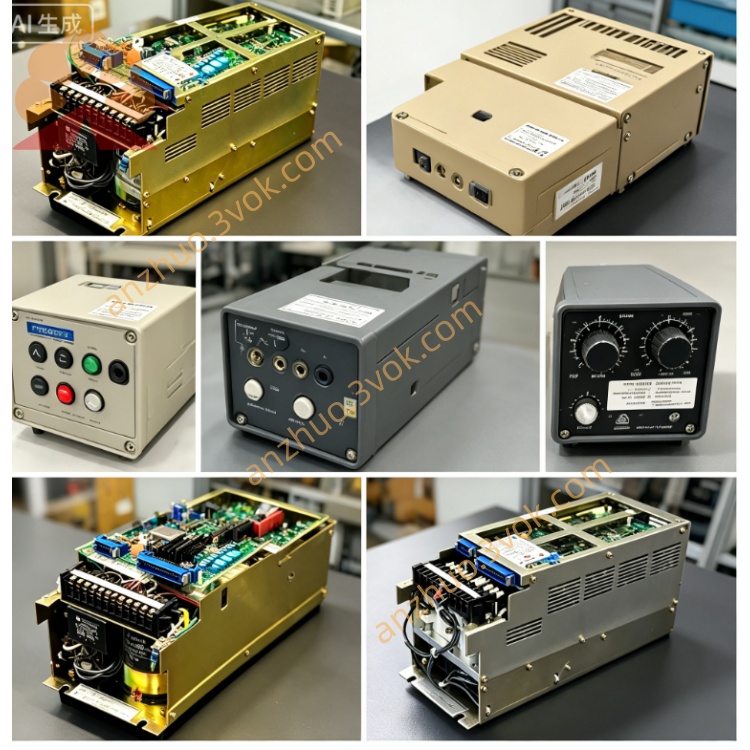
YASKAWA CACR-SR05AB1ER-Y37 0.5kW OEM locked customized SERVOPACK servo drive
CACR-SR05AB1ER-Y37 is 0.5kW OEM locked customized SERVOPACK servo drive of Yaskawa classic CACR-SR series, exclusive matching for YASNAC VS-800 CNC control system for vintage Japanese small CNC lathes/bench turning machines.
Standard hardware circuit same as base model CACR-SR05AB1ER; suffix -Y37 = No.37 factory solidified locked firmware, all servo gain, electronic gear ratio, stroke limit & special machine logic parameters pre-programmed & write-protected. Parameters cannot be reset or arbitrarily modified; only identical -Y37 variant is valid replacement, ordinary non-Y standard drive will cause axis runaway, positioning error or alarm fault.
Description
1. Product Overview
CACR-SR05AB1ER-Y37 is a discontinued full-digital AC SERVOPACK belonging to Yaskawa VS-800 CACR-SR CNC dedicated servo series, paired with 0.5kW low-inertia USAREM servo motors for Yasnac analog CNC machine control systems. It adopts three-loop closed-loop control architecture optimized for analog speed command signals, featuring rack plug-in structure and integrated power braking circuit. Equipped with reinforced analog signal filtering circuits to resist heavy electromagnetic interference inside machining workshops, this unit carries fixed OEM customized I/O logic exclusive for Yasnac controllers. It serves only as replacement spare parts for outdated small CNC feed axes, takes analog speed and torque control as core operation modes with limited auxiliary pulse positioning capacity, and provides comprehensive hardware interlock protection to guarantee stable low-speed constant torque output for miniature precision machining equipment.
2. Model Code Explanation
CACR: Standard series code for Yaskawa AC servo SERVOPACKSR: CNC specialized sub-series oriented to analog speed control05: Rated matched motor power, 0.5kWAB: Unique hardware specification code; rack-mounted plug-in mechanical structure, dedicated analog signal processing circuit, enhanced noise suppression filters, built-in braking transistor module, different terminal layout and internal circuit layout compared with wall-mounted BA/BB general servo drives1: First-generation hardware revision of the main control boardER: Encoder matching specification, compatible with 15-bit composite incremental-absolute encoders, configured with dedicated shielded multi-core encoder terminalsY37: Special OEM customized suffix for designated Yasnac CNC models, fixed I/O signal assignment, optimized communication handshake protocol matching specific Yasnac controllers, unified three-phase 200V industrial voltage standard without regional custom modifications
3. Technical Specifications
Input power only supports three-phase 200–230V AC with ±10% allowable voltage deviation; single-phase power input is not supported for this AB rack variant. Rated continuous output current is 4.2A, peak instantaneous output current reaches 12.6A to output triple short-time overload torque for fast acceleration of light-load feed axes. Maximum control loop bandwidth reaches 360Hz, cooperating with 15-bit absolute encoder to achieve high repeat positioning accuracy. Continuous operating ambient temperature ranges from 0°C to 40°C; storage temperature covers -20°C to 70°C, relative humidity limited between 5% and 80% with zero condensation allowed. The unit holds IP20 protection grade for cabinet rack installation, vibration resistance complies with standard machine tool industrial standards covering 10–1500Hz. Multi-layer built-in safety protection covers overvoltage, undervoltage, overcurrent, overload, overheat, encoder disconnection, motor phase loss, emergency stop interlock and braking circuit fault detection. Standard cooling mode is forced air cooling with built-in mini cooling fan, total unit weight is around 1.5kg.
4. Interface and Communication Configuration
The primary command input channel is 0 to ±10V analog voltage interface preset for speed control mode, switchable to torque command via parameter setup; a reserved differential pulse input channel only supports simple auxiliary positioning with limited adjustable parameters. Isolated digital input terminals receive servo enable, alarm reset, positive and negative travel limit, proximity homing sensor and CNC safety interlock signals. Digital output terminals adopt relay isolation to feed back servo ready, speed arrival, positioning completion and drive fault alarm signals to Yasnac main controller. Dedicated encoder terminal block processes A/B/Z phase differential signals and absolute encoder backup battery wiring, with independent shielding grounding terminals to suppress long-distance wiring interference. A built-in RS422 serial port works exclusively with Yaskawa handheld operator panel for parameter modification, real-time operation data reading and fault history query; no native industrial fieldbus interfaces are factory equipped. Power terminal blocks include three-phase main power R/S/T input, U/V/W motor power output, external braking resistor expansion port and safety grounding terminal, all fitted with lockable wiring terminals to prevent loosening under long-term machine vibration. All analog signal circuits integrate independent multi-stage common-mode filter circuits to adapt complex electromagnetic environments in metal processing workshops.
5. Core Functions
Full digital independent adjustable gain parameters for current, speed and position closed loops, equipped with automatic mechanical gain tuning function to eliminate low-frequency mechanical resonance without complicated manual parameter calibration. Three control modes can be switched through parameter settings: analog speed control as primary mode for CNC feed axes, torque control for light tension winding and pressure holding processes, auxiliary pulse position control for simple fixed-length positioning tasks. Multi-stage embedded notch filters eliminate mechanical oscillation during frequent high-speed acceleration and deceleration reciprocating motion. Built-in electronic gear function supports arbitrary gear ratio adjustment to match various mechanical reduction structures without physical mechanical modification. Multiple homing modes are available including dog-trigger homing and encoder Z-phase signal homing, with adjustable homing speed and position offset parameters. Short-duration triple overload torque output meets rapid acceleration requirements of small light-load CNC axes. Integrated self-diagnosis system automatically records fault codes and pre-alarm operating states; most minor faults support remote alarm reset without power cycling, while severe hardware faults require full power-off restart to clear alarms. Internal integrated braking circuit realizes energy consumption braking during motor deceleration, and external braking resistors can be expanded for equipment with frequent high-speed reciprocating movement.
6. Application Scenarios
This servo drive is specially matched with early Yasnac analog CNC systems, applied to small light-load feed axes of miniature lathes, surface grinders and desktop vertical machining centers. Other typical applications include miniature textile winding and unwinding axes, small electronic assembly indexing turntables, desktop automatic test positioning platforms, mini printing paper feeding and registration axes, and light-duty sorting conveyor auxiliary motion axes. It is designed for rack plug-in installation inside sealed indoor electrical cabinets of machining workshops. Deployment in high-dust, corrosive gas, long-term high-temperature or water splashing environments is forbidden without fully sealed extra protective enclosures. As an EOL discontinued legacy model, it is only suitable for maintenance and spare part replacement of aging CNC and automation equipment, and not recommended for new equipment development projects.
7. Operation and Maintenance Instructions
Before power-on installation, confirm three-phase power supply voltage matches the drive rated specification, completely separate power cables and analog signal cables with full shielding, and connect the shielding layer of encoder cables to the dedicated grounding terminal of the drive. After initial installation, complete parameter initialization matching the corresponding Yasnac CNC system, run automatic gain tuning according to actual mechanical load characteristics, and adjust speed limit, torque upper limit and soft start-stop parameters to reduce mechanical impact on machine tools. Judge operating status through front panel LED indicators during daily operation: steady green light means normal servo operation, flashing red light displays fault alarm codes. Under standard workshop conditions, conduct routine maintenance every two months: clean the built-in cooling fan and ventilation ducts to remove dust blocking heat dissipation, re-tighten all wiring terminals, inspect encoder cable outer jackets for abrasion, and test the backup battery voltage of absolute encoders. When a fault occurs, record the fault code first, cut off three-phase main power after the motor completely stops, then troubleshoot wiring short circuits, mechanical jamming or encoder damage according to fault definitions. For long-term equipment shutdown, disconnect the main power supply; wait more than 30 minutes before re-powering to avoid short circuits caused by internal circuit condensation. Do not disassemble internal power modules and control boards without professional maintenance authorization; high-voltage residual charge remains inside after power cut, wait at least 10 minutes before opening the drive housing for inspection. Avoid frequent rapid power-on and power-off cycles within a short time to protect internal rectifier circuits and braking transistors. Replace the built-in cooling fan immediately once abnormal noise or slow rotation is detected to prevent overheat shutdown failures. Store spare servo drives in dry constant-temperature warehouses with moisture-proof packaging to avoid circuit board oxidation and encoder circuit malfunction.
Get a Quote