
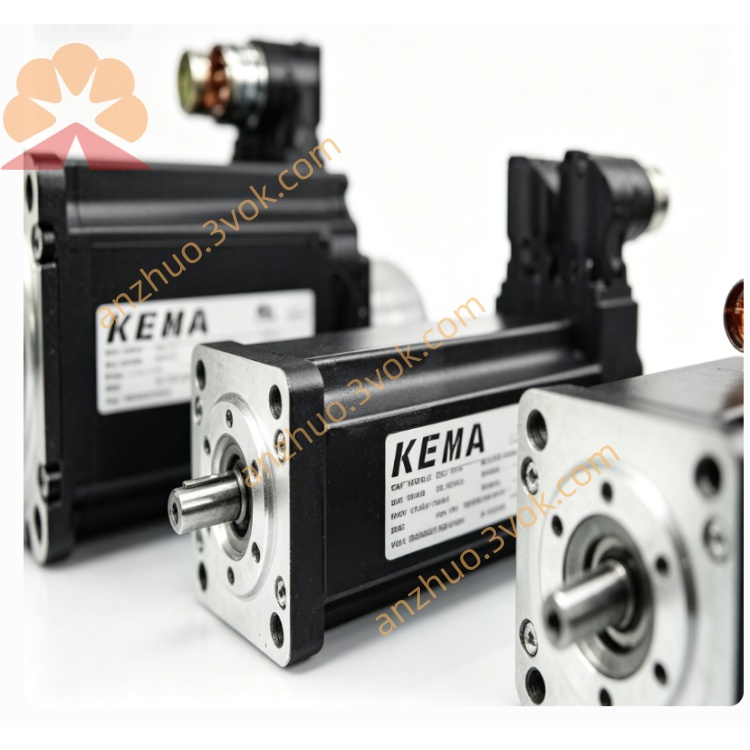
KEBA CU312 & CU312/E Main CPU Controller
Description
Detailed Product Description of KEBA CU312 (Including CU312/E)
I. Product Introduction
KEBA CU312 is a high-performance CPU main control module from the KeControl / KePlast series of Austria's KEBA. It belongs to a mid-to-upper-end control unit, often used to replace CU211 and enhance computing and motion capabilities. It is widely used in mid-to-high-end industrial equipment such as injection molding machines, die-casting machines, hydraulic forming equipment, and multi-axis automated production lines. As the core control center of the entire machine, it undertakes tasks such as logical operations, multi-axis motion control, I/O scheduling, process data management, and communication interconnection.
II. Brand and Basic Information
Brand: KEBA (Austrian Keba)
Model: CU312 (Standard Type), CU312/E (Enhanced Type)
Series: KeControl / KePlast System
Type: PLC Master Module / Motion Controller
Appearance: Standard rack card type, metal reinforced casing, with heat dissipation fins and front panel status indicator lights; compatible with control cabinet standard slots, supports hot swapping.
Installation: Cabinet slot installation, compatible with KEBA standard backplane bus
Protection Level: IP20 (Only for control cabinet)
Certifications: CE, UL, cUL, meets industrial EMC anti-interference specifications
III. Electrical and Environmental Parameters
Power Supply: DC 24 V (±10%, 18–30 VDC), backplane bus power supply, built-in reverse connection, overvoltage, short circuit protection.
Power Consumption: Typical 15–30 W (varies with configuration and load).
Processor: 32-bit industrial-grade CPU (Celeron M / ARM9 architecture, approximately 300 MHz), equipped with VxWorks real-time operating system.
Memory / Storage:
Running Memory: 128 MB ~ 512 MB SDRAM
Program / Data Storage: 64 MB ~ 512 MB Flash
Control Cycle: Minimum 0.5–1 ms, supports high-speed real-time control
Operating Temperature: 0 ℃ ~ +55 ℃ (Enhanced type can reach +60 ℃)
Storage Temperature: -20 ℃ ~ +70 ℃
Humidity: 5% ~ 95% (no condensation)
Anti-vibration / Impact: Compliant with EN 60068‑2‑6 / 2‑27 industrial standards
IV. Interface Configuration
Ethernet: Dual network ports (for some models), supports Modbus TCP, Profinet, EtherCAT, Ethernet/IP, etc., can connect HMI, upper computer, servo, remote monitoring.
Serial: RS‑232 / RS‑485, connects to instruments, sensors, legacy devices.
Fieldbus: Integrated CAN interface (for some models), supports CANopen; dedicated system bus connects KEBA I/O and axis control module.
Status Indicator Lights: Power, operation, error, communication, I/O lights, intuitive fault diagnosis.
Expansion: Backplane bus can be expanded up to 16 I/O modules (DI/DO, AI/AO, temperature, high-speed counting), supports hot swapping and automatic identification.
V. Core Functional Characteristics
High-performance logic control
High-speed processing of sequential control, interlocks, start-stop linkage, fault alarms and safety interlocks, suitable for complex process flows of medium-sized equipment.
Multi-axis motion control
Supports multi-axis synchronization, electronic gearing, cam control, linear / circular interpolation, position / speed / pressure closed-loop control, can control servo, hydraulic and other multi-axis equipment, meeting high-precision motion requirements for injection molding, die-casting, etc.
Process Data and Formula Management
Real-time collection of temperature, pressure, stroke, speed, etc. parameters, supports multiple formula storage, one-click switching and production data traceability, suitable for multi-variety flexible production.
Multi-protocol Industrial Communication
Multiple interfaces of Ethernet + serial port + fieldbus in parallel, compatible with mainstream industrial protocols, can simultaneously connect local devices and upper systems, supports remote program upload/download, online monitoring and fault diagnosis.
High Reliability Design
Industrial-grade components, fanless cooling, all-metal structure, strong anti-interference, can operate stably in dusty, vibrating, wide temperature environment for a long time, MTBF over 100,000 hours.
Standard Programming Compatibility Following IEC 61131-3, it supports ladder diagram LD, function block FBD, and structured text ST, making programming and debugging convenient and compatible with industry-standard development practices.
Six. Typical Application Scenarios
Plastic machinery: Mid-to-high-end injection molding machines (KePlast system), blow molding machines, extrusion machines, main control for the entire process of mold closing, injection, holding pressure, cooling, and ejection.
Die-casting and metal forming: Logic and multi-axis motion control for die-casting machines, hydraulic machines, and stamping equipment, ensuring stable high-speed and high-pressure actions.
Packaging and logistics: Process control for high-speed packaging lines, sorting equipment, and palletizing machines, with multi-axis collaboration.
General automation: Main control for machine tools, textile machinery, assembly lines, and special equipment, achieving automation and data management.
Seven. Installation and Usage Tips
Installation environment: Install in standard control cabinet slots, away from frequency converters and high-power motors, etc., which cause strong interference; reserve more than 20 mm of space around for heat dissipation, avoiding blocking heat dissipation fins.
Wiring norms: Strictly distinguish positive and negative poles for DC 24 V, use shielded lines for communication lines and single-ended grounding; separate strong and weak electrical wiring to reduce electromagnetic interference.
Debugging and maintenance: Use KEBA's dedicated software (such as KeStudio) for programming and configuration; regularly clean dust from heat dissipation fins, check interface connections; power off and prevent moisture during long-term shutdown.
Eight. Summary of Product Advantages
Stronger performance: Compared to CU211, the computing speed, memory capacity, and motion control capabilities have been comprehensively enhanced, suitable for more complex and higher-precision equipment.
Stable and durable: Industrial-grade hardware and fanless design, with low failure rate during long-term operation, suitable for high-intensity continuous production.
Flexible expansion: Seamless integration with KEBA's full range of I/O and function modules, allowing for flexible expansion of points and functions.
Rich communication: Multiple interfaces and multiple protocols supported, strong networking and integration capabilities, suitable for industrial 4.0 interconnection requirements.
Ecological completeness: Complete software, technical documentation, and spare parts, convenient debugging and maintenance, low overall usage cost.
Get a Quote