
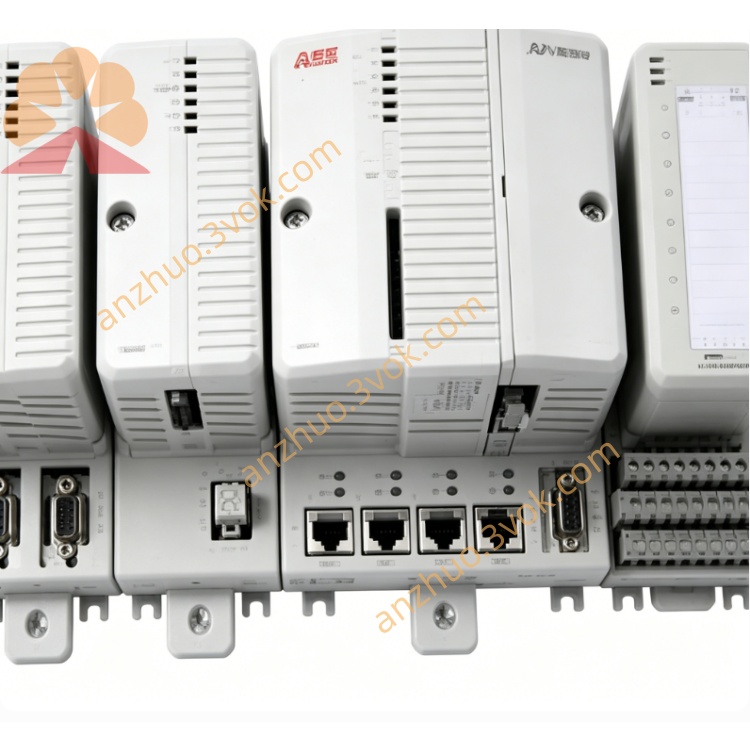
ABB DSCS131 (ordering code 57310001-LM) high‑performance MasterFieldbus communication board
Description
Product Introduction
Model Interpretation
Technical Parameters
Power supply: 5 V DC from backplane, consumption ≤ 3 W
Communication rate: Ethernet 10/100 Mbps adaptive; fieldbus up to 12 Mbps
Operating temperature: 0 °C to +60 °C; storage temperature: −40 °C to +85 °C
Relative humidity: 5%–95%, non‑condensing
Protection class: IP20 (front)
Dimensions: 321.3 mm × 19.8 mm × 228.6 mm
Weight: approx. 0.46 kg
Certifications: CE, UL, CSA, RoHS compliant
Indicators: LED for Power, Run, Fault, Communication status
Interface and Communication Configuration
One Ethernet RJ45 port supporting Modbus TCP, Profinet, and ABB proprietary protocols
Two RS‑485 ports for Modbus RTU and serial fieldbus communication
MasterFieldbus/MasterBus 300/AF100 interface for ABB system‑level communication
Optional fiber‑optic transceiver support for long‑distance, noise‑immune connections
Protocols: ABB DS protocol, Modbus TCP/RTU, Profinet, AF100
Core Functions
High‑speed data exchange between ABB controllers and distributed I/O or third‑party devices
Redundant communication support for fault‑tolerant network architectures
Real‑time data acquisition, command transmission, and diagnostic information exchange
Galvanic isolation via fiber optics to reduce electromagnetic interference
LED status monitoring for quick fault localization and maintenance
Seamless integration into ABB DCS/PLC cabinets, supporting hot‑swap in compatible racks
Application Scenarios
Power generation and substation control for turbine and plant‑wide data networking
Petrochemical and oil & gas processes for real‑time monitoring and remote synchronization
Water and wastewater treatment for distributed pumping stations and treatment processes
Pulp and paper, metals and mining for large‑scale coordinated control systems
Legacy ABB system maintenance and upgrade projects based on AC 400/Advant OCS
Operation and Maintenance Instructions
Install the module in a standard subrack, ensuring secure seating and proper grounding
Use shielded cables for all external communication wiring; separate power and signal cables
Verify backplane voltage (5 V DC) before powering on; check LED indicators after startup
Configure communication parameters (baud rate, protocol, node address) via ABB engineering tools
Clean the module surface regularly with a dry cloth; avoid moisture and corrosive substances
Periodically inspect connectors for oxidation or damage; tighten loose connections promptly
Back up configuration data before replacement; use anti‑static measures during handling
Operate within specified temperature and humidity limits; avoid strong vibration and direct sunlight
Get a Quote