
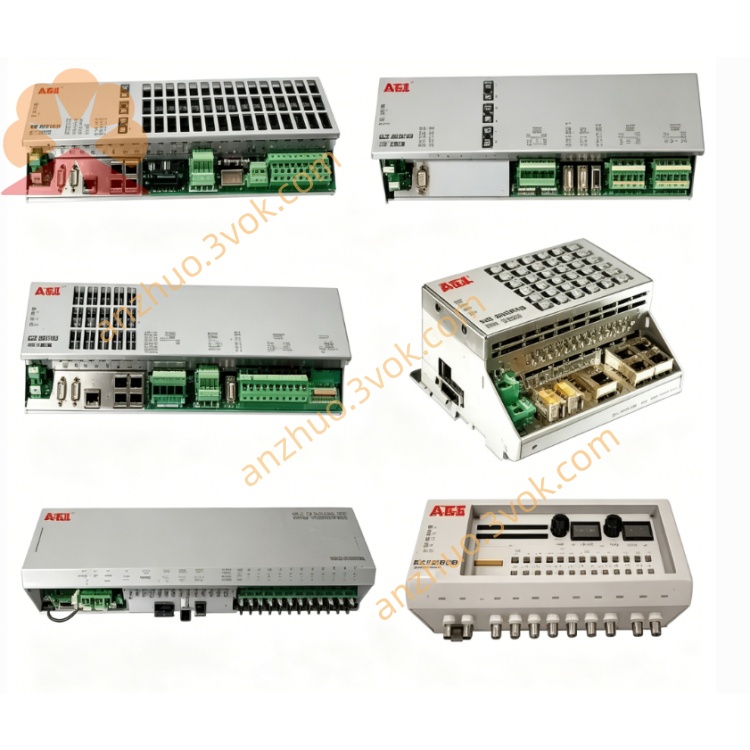
ABB DSPC174 (ordering code 3BSE005461R1) high-performance digital signal processing and control board
Description
Product Introduction
Model Interpretation
Technical Parameters
Processor: 32‑bit RISC (Freescale MPC5554), 40 MHz
Memory: 128 KB RAM, 1 MB Flash
Power supply: 24 V DC, consumption ≤15 W
Operating temperature: −20 °C to +60 °C; storage −40 °C to +85 °C
Relative humidity: 5%–95%, non‑condensing
Protection class: IP20 (front)
Dimensions: approx. 120 mm × 80 mm × 30 mm
Weight: approx. 0.3–0.4 kg
Certifications: CE, UL, CSA, RoHS compliant
Indicators: LEDs for Power, Run, Fault, and Comms status
Interface and Communication Configuration
Backplane: ABB Modulebus for controller I/O and system data exchange
Ethernet: 2 × RJ45 (10/100 Mbps) for Modbus TCP, Profinet, and ABB protocols
Serial: 2 × RS‑232, 1 × RS‑485 for Modbus RTU and fieldbus
I/O: 16 digital inputs, 8 digital outputs (24 V DC, isolated)
Protocols: ABB DS Protocol, Modbus TCP/RTU, Profibus DP, AF100
Redundancy: Dual Ethernet ports for redundant network topologies
Core Functions
Real‑time digital signal processing for high‑speed data acquisition and filtering
Closed‑loop control for motion, temperature, pressure, and flow processes
High‑speed data exchange between controllers, I/O, and third‑party devices
Redundant communication support for fault‑tolerant system architectures
Self‑diagnostics with LED status for fast fault localization and maintenance
Hot‑swap capability in compatible racks for zero downtime replacement
Galvanic isolation to reduce EMI between field and system sides
Application Scenarios
Power generation and substations for turbine control and plant‑wide data networking
Petrochemical and oil & gas for real‑time process monitoring and safety interlocks
Pulp and paper, metals and mining for high‑speed production line control
Water and wastewater treatment for distributed pumping and process control
ABB system retrofits and expansions (Advant OCS/AC 800M/800xA) for legacy integration
Operation and Maintenance Instructions
Install in a standard ABB subrack, ensuring secure seating and proper grounding
Use shielded cables for Ethernet, serial, and I/O wiring; separate power and signal cables
Verify 24 V DC supply before power‑on; check LED indicators for normal operation
Configure network, I/O, and control parameters via ABB engineering tools
Keep the module surface clean with a dry cloth; avoid moisture and corrosive substances
Periodically inspect connectors for oxidation or damage; tighten loose connections
Back up configuration data before replacement; use anti‑static measures during handling
Operate within specified temperature and humidity limits; avoid strong vibration and direct sunlight
Get a Quote