
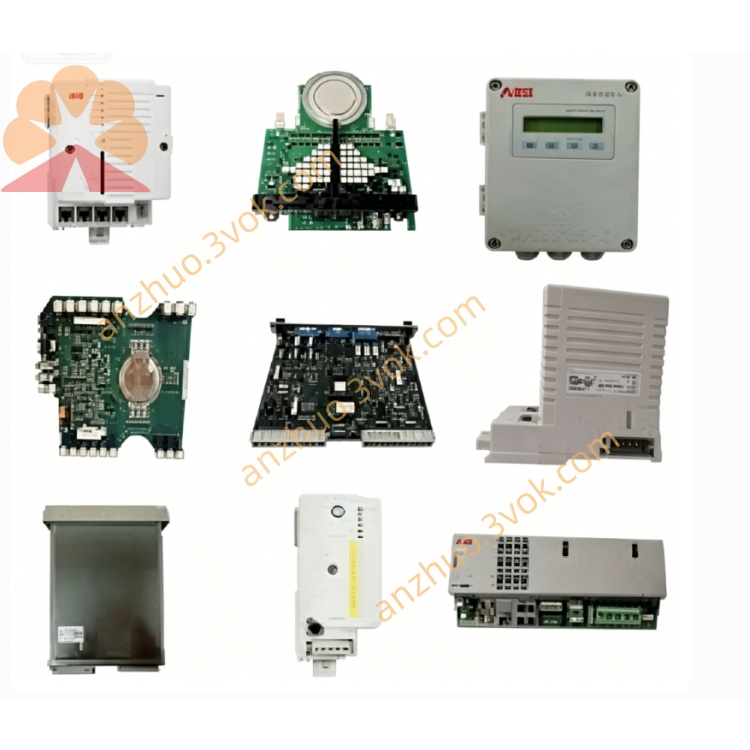
ABB PFSK164 (3BSE021180R1) PROFIBUS DP‑V1 / PROFIsafe safety communication module
Description
Product Introduction
Model Interpretation
PFSK: Process Field Signal Card (series designation for ABB process communication/interface cards)
164: High‑integrity safety communication variant in the PFSK line, distinct from PFSK160/160A/162; features PROFIsafe and SIL 3 certification
3BSE021180R1: The official ABB part number for ordering and inventory tracking
Technical Parameters
Power Supply: 24 V DC (nominal), typical power consumption 15–30 W depending on configuration
Safety Level: SIL 3 (IEC 61508), PROFIsafe certified
Communication Protocol: PROFIBUS DP‑V1 with integrated PROFIsafe profile
Isolation Voltage: 2500 V AC for one‑minute dielectric withstand
Operating Temperature: −20 °C to +60 °C
Storage Temperature: −40 °C to +85 °C
Humidity: 5%–95% relative humidity, non‑condensing
Protection Class: IP20 (for control cabinet installation)
Mounting: Standard S800 I/O rack, supports hot‑swap in redundant configurations
MTBF: ≥800,000 hours for high reliability
Interface and Communication Configuration
VME P2 I/O Bus: System connection for power and data exchange with AC 800M controller
DB9 Connector: PROFIBUS DP‑V1 / PROFIsafe communication port
Screw Terminals: Field wiring for safety‑related digital I/O signals
LED Indicators: Power, Run, COM, and Fault/SIL status LEDs for real‑time diagnostics
Redundancy: Supports 1+1 redundant operation for uninterrupted safety communication
Configuration: Parameterization via standard PROFIBUS GSD files and ABB engineering tools
Core Functions
Safety Communication Gateway: Transmits SIL 3 safety data between AC 800M High Integrity controllers and PROFIBUS DP‑V1 slave devices using PROFIsafe
Signal Isolation & Filtering: Provides electrical isolation and noise filtering for safety‑critical digital signals to prevent interference
Safe Data Exchange: Enables deterministic, error‑checked data transmission between SIS and DCS with strict separation of safe/non‑safe traffic
Self‑Diagnosis & Fault Detection: Continuously monitors communication, power, and channel status; detects faults and triggers safety‑related alarms
Redundancy Support: Ensures seamless failover in redundant configurations to maintain safety function during single‑point failures
Application Scenarios
ABB AC 800M High Integrity DCS/PLC systems in safety‑critical industries
Power Generation: Turbine control, excitation systems, generator synchronization, and boiler safety interlocks
Oil & Gas: Pipeline safety shutdown (ESD), burner management, and pressure protection systems
Chemical & Petrochemical: Reactor safety interlocks, toxic gas monitoring, and emergency isolation
Metallurgy & Pulp/Paper: High‑speed machine safety, furnace protection, and critical process safety controls
SIS‑DCS Integration: Any application requiring SIL 3‑rated communication between safety and standard control domains
Operation and Maintenance Instructions
Installation: Mount in a dry, ventilated control cabinet away from heat sources and strong electromagnetic fields; use standard S800 I/O rack mounting
Wiring: Use stranded copper wires with appropriate gauge; tighten all screw terminals to specified torque; separate safety and non‑safe wiring to avoid cross‑interference
Power‑Up: Verify 24 V DC supply is stable; check that Power LED is ON and no Fault LEDs are illuminated
Routine Inspection: Periodically check LED status, cable connections, and module temperature; ensure no physical damage or loose connectors
Handling: Always disconnect power and use anti‑static protection before inserting/removing the module
Maintenance: No on‑site calibration required; replace the module with a spare if permanent faults are diagnosed; update configuration files only via approved engineering tools
Safety Compliance: Maintain PROFIsafe and SIL 3 certification by using only ABB‑approved spare parts and following safety application guidelines
Get a Quote